
GreyW
Let’s zap ’em — advanced radiation therapy techniques


Jr. Medical Physicist
Thompson Proton Center
Monday, September 8, 2025
11:30 a.m.
Crowne Plaza Hotel
401 W. Summit Hill Drive, Knoxville
Price for buffet lunch is $15 (includes complimentary parking in the hotel garage).
If you plan to eat, please RSVP This email address is being protected from spambots. You need JavaScript enabled to view it. by Friday, September 5 at noon.
If you choose not to eat, a charge of $7 will cover parking and event arrangements.
The formal meeting begins at 11:55 a.m.
Radiation therapy is the treatment of cancer with x-rays, gamma rays or charged particles, such as electrons or protons. As medical physicists we are closely involved with the patient’s care team, which often consists of multiple MDs, such as the radiation oncologist, medical oncologist and surgeon, as well as nurses, radiation therapists, dosimetrists and other staff.
This presentation will highlight different modalities used in radiation therapy, including a brief history for each modality and an overview of state of the art technology and applications. Modalities to be discussed are conventional photon therapy (x-rays), proton therapy (charged particles), and briefly Gamma Knife® (gamma rays) therapy. All these modalities are available for cancer treatment here in Knoxville, TN.
What is a medical physicist?
Medical physicists are an integral part of the cancer patient care team. Our role in a nutshell is to ensure that the radiation machines are working safely and correctly and that each patient receives the dose the radiation oncologist prescribed in a safe and accurate manner.
Most medical physicists will attend a two year medical physics masters program at a university before undergoing a 2 year residency program in a radiation oncology department. Final board certification involves passing a board exam that is split up in 3 parts that are taken at least one year apart.
Dr. Isabella Pfeiffer was born and raised in Munich, Germany. She graduated from the Munich Vet School in 2004. Over the next six years she completed a rotating internship, her doctoral thesis (Dr. med. vet.) and a medical oncology residency at the Munich Vet School and Purdue University, IN. Since 2010 she is board-certified in Medical Oncology by the ECVIM-CA.
She also spent four months at the Radiation Oncology Service of UC Davis, CA. In 2011 she worked as a senior clinician for the Radiation and Medical Oncology Service at the Vet School in Munich, Germany. From January 2012 until May 2013 she was Head of the Oncology Department at a small animal clinic in Düsseldorf.
She completed a radiation oncology residency at UC Davis in August 2015, passed her board examination in September 2015 and worked as a clinical assistant professor for radiation oncology at the Veterinary Teaching Hospital of the University of Tennessee from 2015 till 2020.
She then switched careers and completed the Certificate in Medical Physics at the University of Tennessee Department of Nuclear Engineering and a 2-year residency program with the Thompson Cancer Survival Center at Covenant Health. She is currently working as a medical physicist for the Thompson Proton Center and as a veterinary radiation oncology consultant for the Harvest Veterinary Oncology Center in Hong Kong.
At this meeting, we’ll also determine TSK membership interest in a guided tour of the Thompson Proton Center’s massive behind the scenes proton acceleration infrastructure and what available dates and times may be best for such a TSK site visit. We’re glad Knoxville has been among the first cities worldwide with a Proton treatment facility. There still are fewer than 50 in the U.S.
 Proton beam distribution from the cyclotron to the treatment rooms at Thompson Proton Center.
  2016 Wolf Naegeli
For more information on TSK and its meetings, please email TSK secretary, This email address is being protected from spambots. You need JavaScript enabled to view it. or call him at 865-679-9854.
Critical Connections: The University of Tennessee and Oak Ridge from the Dawn of the Atomic Age to the Present

Emeritus Professor of Physics
University of Tennessee
Monday, August 11, 2025
In 1940 Oak Ridge did not exist and UT had no PhD programs. Much has changed in the last 80 years as UT and the federal facilities in Oak Ridge have grown enormously and in many examples jointly. The UT partnership with Oak Ridge National Laboratory is unique in the country. Some of the history of this partnership will be discussed, along with the benefits that have come to each institution. This topic is explored in detail in a new book published in 2024 by UT Press: Critical Connections: The University of Tennessee and Oak Ridge from the Dawn of the Atomic Age to the Present, by Lee Riedinger, Al Ekkebus, Ray Smith, and William Bugg.
Lee Riedinger got his physics PhD from Vanderbilt in 1968 after spending two years working on dissertation research at Oak Ridge National Laboratory. He joined the University of Tennessee Physics faculty in 1971 and served there until his retirement in 2019.
His field is experimental nuclear physics and he led many experiments at accelerators at ORNL and other labs in the U.S. and Europe. He was the UT vice chancellor for research three different times and directed the UT/ORNL Science Alliance in the 1980s.
Reidinger was one of the leaders of the initiative at UT to team with Battelle and bid on the contract to manage ORNL, which succeeded as the UT-Battelle LLC tenure at ORNL began in 2000. He served on this management team from 2000 to 2006, the first four years as the deputy director for science and technology.
He returned to UT in 2006 and next started the UT/ORNL Bredesen Center in 2010 and its two new interdisciplinary PhD programs, which he directed until his retirement.

Locally available at
Addison’s, 126 S. Gay Str, Knoxville, TN 37902
Union Ave Books, 517 Union Ave, Knoxville, TN 37902
Barnes & Noble, 8029 Kingston Pike, Knoxville, TN 37919
Lee Riedinger is former vice chancellor for research at the University of Tennessee, Knoxville.
Al Ekkebus is a former outreach leader for neutron science at Oak Ridge National Laboratory.
Ray Smith is the Oak Ridge historian, formerly at Y-12.
William Bugg is former head of the Physics Department at the University of Tennessee, Knoxville.
“The future of the Clinton Laboratories [now ORNL] at Oak Ridge was much less clear [than that of other facilities]. The General Advisory Committee had concluded the laboratory was not worth saving. As Oppenheimer had told the Commissioners on March 30 [1947], ‘Most of us think that the evidence is in that Clinton will not live even if it is built up.’” From: Atomic Shield: A History of the Atomic Energy Commission, by Richard G. Hewlett and Francis Duncan, cited in the ORNL Review Blog.
“There are people in Oak Ridge who know more about Oak Ridge than Lee Riedinger does, there are people at UT who know more about UT than Lee Riedinger does, but no one has as much knowledge about both UT and Oak Ridge as Lee Riedinger.” Soren Sorensen, UT professor and then head of the UT Physics Department, quoted in the Daily Beacon, Sep 12, 2006
“One of the nicest and most gracious individuals we have ever known has announced plans to retire … . The position from which he is retiring — inaugural Director of UT Knoxville’s Bredesen Center for Interdisciplinary Research and Graduate Education — is one into which he has literally poured his heart and soul. Riedinger was part of the UT and ORNL team that helped conceive the idea to use both institutions as a way to attract more top flight graduate students to the region, and it has clearly achieved that goal.” Tom Ballard, Technovation.biz, Oct 29, 2018
For more information on TSK and its meetings, please email TSK secretary, This email address is being protected from spambots. You need JavaScript enabled to view it. or call him at 865-679-9854.
TSK Charter
If your browser does not support scrolling the document to view all of its pages, you can download the file by tapping the email button above the top right corner of the title page.
TSK Bylaws
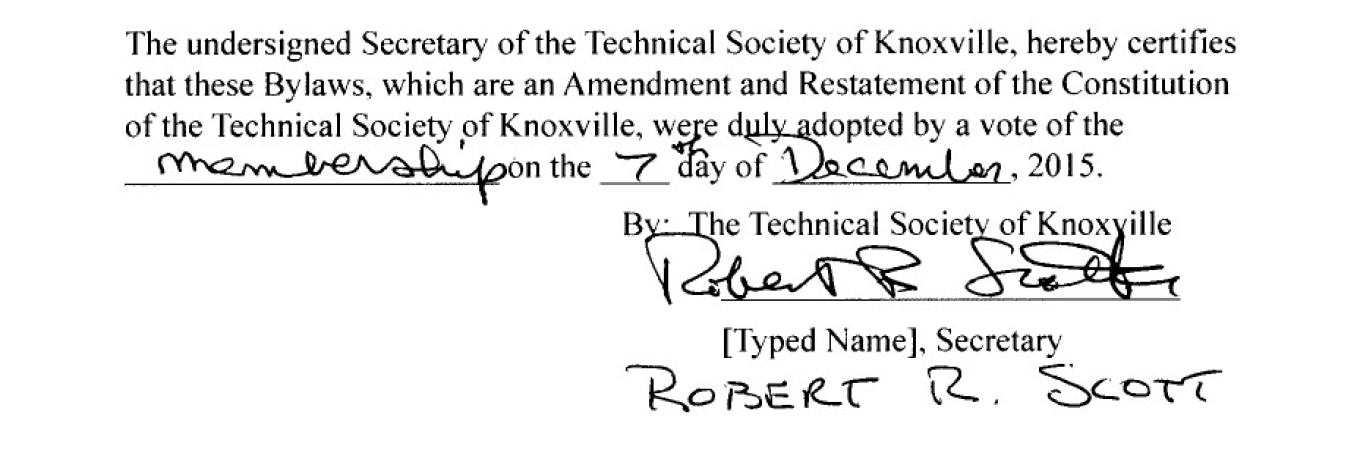
Bylaws of
THE TECHNICAL SOCIETY OF KNOXVILLE
12/7/2015
Article 1. Name, Location, and Purpose.
-
Name.
The name of this nonprofit corporation shall be the Technical Society of Knoxville (the “Society”), abbreviated TSK.
-
Location.
The location of the Technical Society of Knoxville shall be in the City of Knoxville, Tennessee, and the place for meetings and the transaction of business shall be selected by the Board of Directors.
-
Purpose.
The purpose of the Technical Society of Knoxville shall be as follows:
-
To promote the advancement of the technical and allied arts and sciences or their branches.
-
To unite, in an educational manner for their mutual welfare, the engineers, scientists, and other persons engaged or interested in the technical professions, arts and sciences within the City of Knoxville and vicinity.
-
To aid in an educational manner, the public in the solution of civic problems involving engineering or scientific matters, and to encourage research in and investigations of such problems of public interests; to provide publications and instructions on subjects tending to improve or increase the technical skill and social usefulness of persons engaged in technical or scientific pursuits or other allied activities; and to promote facilities for mutual contact and discussion.
-
To do all things incidental to the foregoing or for the professional improvement, social intercourse, and maintenance of high professional standards of the members of the Society (the “Members”).
-
The Society will, as a nonprofit corporation, not have or issue shares of stock, and no part of the income or assets of the Society will be distributed to its Directors or Officers. The Society may not contract with its Directors or Officers.
-
The means to be employed for this purpose shall be the holding of meetings of the Society for:
-
the examination and study of achievements and subjects of scientific and technical knowledge;
-
the presentations and discussion of topics of interest and the reports of committees;
-
promoting social and professional gatherings; and
-
the consideration of matters affecting the welfare of its Members.
-
-
Article 2. Board of Directors
-
Number.
The Board of Directors (the “Board”) shall be composed of no less than four (4) persons and no more than twelve (12). The members of the Board (the “Directors”) shall be Members in good standing, who have shown an interest in the affairs of the Society and have regularly engaged in activities of the Society over the preceding years.
-
Election of Directors.
-
Directors shall be elected by the Members in good standing present at the annual membership meeting of the Society (“Annual Meeting”). Director terms shall be limited to three (3) years.
-
Directors may serve a total of three (3) consecutive terms.
-
-
Removal of Directors.
The Board may remove any Director by an affirmative vote of a two-thirds (2/3) majority of all Directors. A Director may also be removed by an affirmative vote of a simple majority of Members in good standing present at the Annual Meeting or at a Special Business Meeting of the Society.
-
Resignation of Directors.
Any Director may resign at any time, though such resignation must be in writing and will take effect immediately upon submission to the Board.
-
Board of Directors’ Duties.
The Board shall manage the affairs of the Society; all the powers of the Society shall rest with the Board . The Board shall be the Trustees of the Society under the laws of the State of Tennessee. Directors shall make a diligent effort to attend all meetings of the Board, regular and special (collectively “Board Meetings”).
The Board shall approve the annual budget of the Society (the “Budget”) and must authorize any amendments or changes to the Budget that may become necessary during the course of the business year.
The Board shall audit or cause to be audited the accounts of the Treasurer at least once each year, and shall have supervision of the financial affairs of the Society. A financial report shall be published annually.
-
Vacancies.
If a vacancy occurs within the Board, the Board may elect a new Director to fill the vacancy. Directors so elected shall serve until the next Annual Meeting.
-
Meetings of the Board.
-
Quorum; Adjournment. A majority of the Directors then in office shall constitute a quorum. If a quorum is present when a vote is taken, the affirmative vote of a majority of the Directors present is the act of the Board , unless these Bylaws, the Society’s Charter, or statute require the vote of a greater number of Directors. If a quorum is not present at any meeting of the Board, the Directors present thereat may adjourn the meeting without notice other than the announcement at the meeting that the meeting shall be adjourned until a quorum is present.
-
Regular Board Meetings. Regular meetings of the Board (“Regular Board Meetings”) may be held in or outside the State of Tennessee, at such time and place as fixed by the Board. Regular Board Meetings shall be scheduled by the Board at least thirty (30) days before the Regular Board Meeting.
-
Special Board Meetings. Special meetings of the Board (“Special Board Meetings”) may be held either in or outside the State of Tennessee, and may be held at any time upon the call of the President, or any two (2) Directors after written or personal notice is given to each Director at least five (5) days before the Special Board Meeting.
-
Waiver of Notice. A Director may waive the notice of Board Meetings by attendance in person or by so stating in writing, either before or after the meeting.
-
Written Consent. Whenever under the Society’s Charter, these Bylaws, or under the laws of the State of Tennessee the Directors are permitted or required to take any action, the Board may take such action without a Board Meeting upon a written consent setting forth the action taken and signed by all the Directors entitled to vote thereon.
-
Presumption of Assent. Any Director who is present at a Board Meeting at which action on any corporate matter is taken shall be presumed to have assented to the action taken unless his or her dissent shall be entered in the minutes of the meeting or unless he or she shall file his or her written dissent to such action with the Secretary or person acting as the secretary of the Board Meeting before the adjournment thereof or shall forward such dissent by registered mail to the Secretary of the Society within three (3) days after the
adjournment of the Board Meeting. Such right to dissent shall not apply to a Director who voted in favor of such action.
-
-
Conflict of Interest.
In cases of a conflict of interest for any Director, other Officer, or agent of the Society, the person with the potential or actual conflict of interest shall notify the Board immediately. A decision on whether the potential conflict of interest is an actual conflict of interest shall be reached by the Board at the next scheduled Board Meeting; unless the conflict is time-sensitive, in which case the Board will schedule a Special Board Meeting to reach a determination. Directors who are the subject of the potential conflict of interest shall not participate in or be present for the vote regarding their potential conflict of interest. Persons who have been determined to have a conflict of interest shall not participate in the decisions relating to the conflict.
Article 3. Officers.
-
Number.
The Officers shall be a President, a Vice-President, a Secretary, and a Treasurer. It is possible for one (1) person to cumulate the two (2) responsibilities of Secretary and Treasurer. These Officers of the Society shall be Members of the Board.
-
Election of Officers.
-
Officers shall be elected by the Society’s Members in good standing at the Annual Meeting.
-
The term of office of all Board Officers shall be one (1) year. The term of each Officer shall begin immediately following his or her election, when he or she shall assume office and shall continue for the period above mentioned or until his or her successor is duly elected.
-
Officers may serve a total of three (3) consecutive terms.
-
-
Vacancy in Offices.
-
Vacancy in the office of President shall be filled by the Vice-President, and a new Vice-President shall be appointed as described below.
-
Vacancy in any Office other than the President’s shall be filled by appointment of another Director. If none of the Directors is qualified or willing to assume the duties of the vacant office, a Society Member in good standing may be appointed for the remainder of the original term. Appointment shall be by the majority vote of the remaining Directors.
-
-
Removal of Officers.
Any Officer may be relieved of the officer duties at any time with or without cause by an affirmative vote of a majority of all Directors.
-
Duties.
-
President. The President shall have the general supervision of the affairs of the Technical Society of Knoxville and shall preside over Board Meetings. The President shall have power to appoint all committees and shall be ex-officio Member of all standing committees.
-
Vice-President. The Vice-President shall preside at the meetings in the absence of the President and shall assume and discharge all duties thereof.
-
Secretary. The Secretary shall, if possible, attend all meetings of the Society and of the Board. The Secretary shall preserve true minutes of the proceedings of all such meetings. The Secretary shall keep a record of all ballots canvassed; give all notices required by these Bylaws or by resolution of the Board; collect significant documents pertaining to the activities and history of the society for annual submission to the University of Tennessee Libraries’ Special Collections for addition to the Society Archive; and perform such other duties as may from time to time be assigned to him or her by the Board.
-
Treasurer. The Treasurer shall, if possible, attend all meetings of the Society and of the Board. The Treasurer shall have custody of all funds and securities and shall keep in books belonging to the Society a full and accurate account of all receipts and disbursements. The Treasurer shall propose the Budget for adoption by the Board and shall be responsible for the preparation of the Society’s monthly and annual financial reports.
-
Article 4. Membership.
-
Eligibility.
Members shall be persons now or formerly engaged in the pursuit of engineering, architecture, physics, chemistry, biosciences, earth sciences, or allied arts and sciences in a broad sense, such as economics, urban and industrial development, and information science. At the time of application for Membership, a prospective Member shall have graduated from an accredited school of engineering, architecture, or science; and shall have had active practice or equivalent professional experience in his or her field. Membership in leading national or international engineering, technical, or scientific societies shall be recognized as a satisfactory professional qualification if the Membership Committee deems eligibility requirements of said national or international society to be essentially equivalent to the Technical Society of Knoxville’s membership
requirements. Teaching engineering, arts, or science in accredited schools shall be held equivalent to an equal number of years of active practice.
-
Membership Rights.
-
Good Standing. Members in good standing shall have paid all Annual Dues, or Fractional Dues, as necessary for the year.
-
Rights. Members in good standing shall have the right to vote and hold office in the Society.
-
Article 5. Membership Committee and Procedures.
-
Membership Committee.
The Membership Committee shall investigate the eligibility of applicants for Membership in the Society, and shall also perform such other duties as may be deemed necessary by the majority of the Board for fostering and promoting Membership in and the goals of the Society consistent with these Bylaws.
-
Membership Application.
Application for Membership shall be made in such form as may be prescribed by the Membership Committee and shall include a concise statement, with dates, of the applicant’s professional training and experience, at least three (3) references to reputable professionals who are personally acquainted with the applicant, and a pledge to conform with the requirements of Membership if elected. The application shall be signed by the applicant.
-
Election of Members.
-
Membership applicants may be recommended or rejected for election by a majority vote of the Membership Committee. The Membership Committee shall consider and vote on new Membership applications within one (1) week of having received the application and immediately notify the Board of its recommendation.
-
If, within one (1) week, no Director objects to the recommendation of the Membership committee, the applicant shall be considered elected or his application denied according to the recommendation by the Membership Committee and the Secretary shall notify the applicant thereof. However an elected applicant shall not become a Member until the current dues are paid within thirty (30) days after such notification.
-
If, within one (1) week, one or more Directors do not concur with the recommendation of the Membership Committee, the application will be considered at the next Regular or Special Board Meeting or may be decided by Board conference call and Written Consent.
-
Once Membership requirements are satisfactorily completed, the new Member’s name and brief qualifications shall be announced at the next meeting and published in the Soupçon.
-
-
Honorary Members.
-
Honorary Members shall be persons who, as Members, have made outstanding contributions to the Society and who have achieved reasonable eminence in engineering, architecture, physics, chemistry, or allied arts and sciences. The number of Honorary Members living in the Knoxville area shall not exceed five (5) percent of the total Membership of the Society including Honorary Members, on January 1 of the current year.
-
Honorary Members shall be elected by a majority of the Members of the Board of Directors. Announcement and presentation of new Honorary Members shall be made at the discretion of the Board, preferably at the next Annual Meeting.
-
-
Resignation of Members.
Resignation of any Member from the Society shall be communicated to the Secretary. The Board shall not accept such resignation until all indebtedness to the Society shall have been satisfactorily discharged or excused by the Board.
-
Expulsion of Members.
Expulsion of any Member or a request for resignation, for any reason other than delinquency in payment of dues, shall require majority vote by the Board, and if such action is taken, the Secretary shall formally notify the said Member. The Board shall consider such action upon written request of ten (10) Members in good standing.
-
Termination of Members.
A Membership is automatically terminated if dues are not paid for one (1) year.
Article 6. Dues.
-
Annual Dues.
Annual Membership dues shall be determined by the Board, subject to ratification by the Members at the Annual Meeting, and shall be payable the first Monday after January 1. Increases in membership dues shall not be retroactive if the member has already paid for the year’s dues between the first Monday after January 1 and the day before the Annual Membership Meeting.
-
Fractional Dues.
Fractional dues for the current year shall be charged to any person elected to Membership after March 31 of that year. Percentages of dues for new Members shall be assessed as follows:
-
January through March: 100%
-
April through June: 80%
-
July through September: 60%
-
October through November 40%
-
December: dues for next year.
-
-
Arrears.
Arrears in dues on the part of any Member after April 30 shall automatically suspend the Member’s good standing until such dues have been paid, unless payment is excused or the time of payment is extended by the Board . The Treasurer shall notify in writing, before November 30 of each year, each Member whose dues were in arrears on October 31 that year. Arrears in dues on the part of any Member after December 31 shall automatically terminate Membership in the Society unless the Board takes action to the contrary. The name will be removed from the following year’s Membership register.
-
Extension of Time for Payment.
Extension of time for payment of dues and for the application of any penalty shall be at the discretion of the Board. The Board may also, for sufficient cause, temporarily excuse from the payment of annual dues any Member who for any good reason is unable to pay dues.
Article 7. Committees.
Appointment of standing committees shall be made by the President at the 1stregular meeting of the Board after the Annual Meeting. The President shall also appoint from time to time, with the approval of the Board, special committees to report on subjects of or public interest or of special interest to the Society.
Article 8. Membership Meetings of the Society.
-
Annual Meeting.
The Annual Meeting shall be held during January on a date approved by the outgoing President, at which time the annual reports of Officers and committees of the preceding year shall be presented and other business may be transacted.
-
Special Business Meetings.
A Special Business Meeting of the Society may be called by request of a majority of the Directors or by no less than fifteen (15) Members in good standing, with no less than two (2) weeks of notice.
-
Quorum Requirement.
A quorum for the transaction of business shall consist of at least fifteen (15) percent of the number of Members eligible to vote. No business other than that mentioned in the call shall be transacted at any meeting.
-
Order of Business.
The order of business to be observed at any meeting shall be determined by the Board, and such order of business shall not be suspended except by a majority vote of the Members present.
-
Resolutions and Motions.
A resolution or motion concerning other than internal affairs of the Society shall be out of order at a membership meeting of the Society unless submission shall have been approved by the Board, or a copy thereof shall have been in the possession of the President or the Secretary for at least three (3) days.
Article 9. Amendments.
-
Amendment of the Bylaws.
Any proposed amendments to the Bylaws must be submitted in writing, signed by not less than five (5) Members eligible to vote, and shall be filed with the Secretary, who shall read the same to the Society at the next membership meeting and post the same to the Society’s website. Not less than two (2) weeks’ notice of the proposed amendments shall then be given to the Membership by distributing the amendments via the Society’s electronic mailing list and posting them on the Society’s website, and the President shall set a date of meeting at which the amendments will be voted on. A two-thirds (2/3) affirmative vote of all Members present shall be necessary for the adoption of each proposed amendment.
-
Amendment of the Charter.
Any proposed amendment to the Charter of the Society, except for those contemplated in Tennessee Code Annotated § 48-60-102, must be submitted in writing, signed by not less than ten (10) Members eligible to vote, and shall be filed with the Secretary, who shall read the same to the Society at the next membership meeting and post the same to the Society’s website. Not less than four (4) weeks’ notice of the proposed amendment shall then be given to the Membership by distributing the amendments via the Society’s electronic mailing
list and posting them on the Society's website, and the President shall set a date of meeting at which the amendments will be voted on. A two-thirds (2/3) affim1ative vote of all Members present and a two-thirds (2/3) affirmative vote of all Directors present shall be necessary for the adoption of each proposed amendment, unless the Board conditions the amendment's adoption on receipt of a higher percentage of affirmative votes or on any other basis as consistent with Tennessee State law.
Article 10. Adoption of Bylaws.
TSK Board of Directors
President

Mary Knepper, PhD English
President at Ryba Associates, Inc.
First Vice President
Chair of the Membership Committee

James M. Reynolds, MD, DABFM
Clinic Physician at CareHere (retired)
Second Vice President
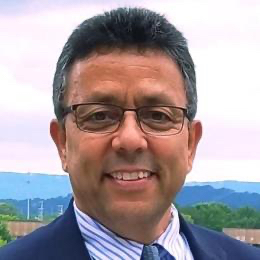
Doualem Hadjerioua, PhD Civil Engineering & Engineering Mechanics
Director of Hydro Operations at Mesa Associates, Inc.
Secretary

Deadrick Wayne Loveday
VP at Knoxville Utilities Board (retired)
Treasurer

Bruce W. Webb, PE, BE Electrical and Electronics Engineering
Senior Engineer at Knoxville Utilities Board
TSK President 2023, 2024
CAO
TSK Webmaster

Wolf Naegeli, PhD Natural Resources Policy and Planning
Senior Research Scientist at University of Tennessee (retired)
TSK President 2017
Directors

Robert R. Scott, III, PE, MS Chemical Engineering
Professor of Engineering at Pellissippi State Community College (retired)
Honorary Member of TSK; Grandson of TSK’s founder Charles E. Ferris
TSK Representative on the Knox County Air Pollution Control Board
TSK President 1982
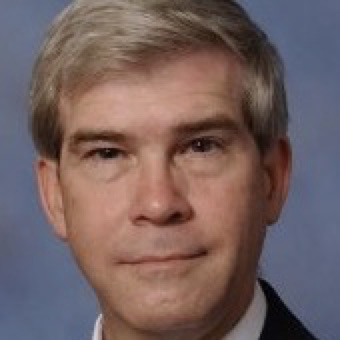
Stephen J. Hillenbrand, PE, MS
Senior Forensic Engineer at DONAN (retired)
TSK President 2020–2022
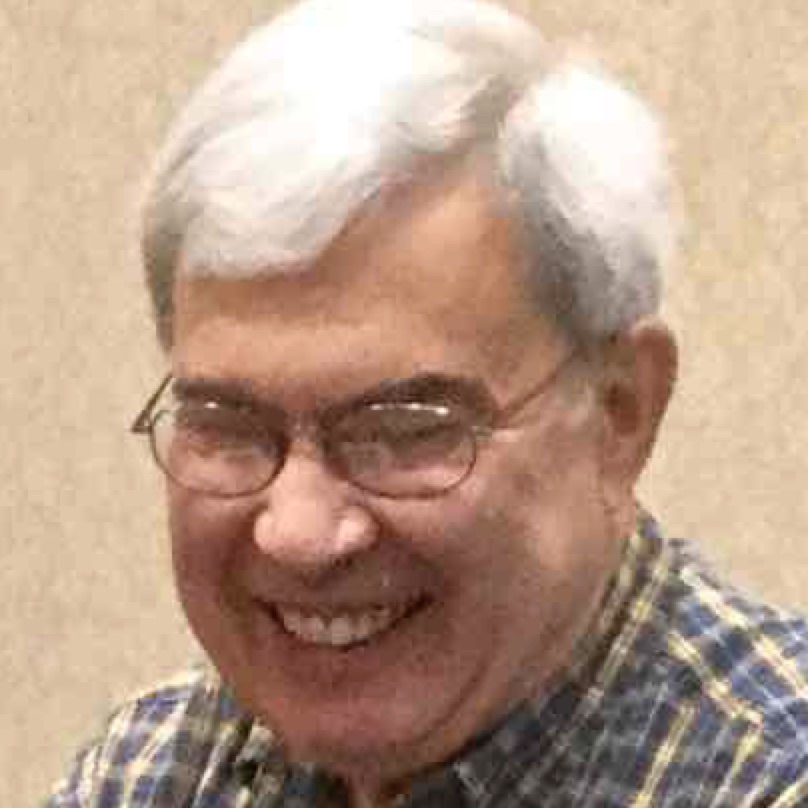
Everis R. Engstrom, PE, MSEE Electrical and Electronic Engineering, MBA
VP of Engineering at Daxor Corporation (retired)
TSK President 2016

Donna R.H. Riggs, PE, MS IE Manufacturing
Software Quality Assurance Engineer at Riggs Quality Consulting
TSK Vice President 2022, 2023
Treaty on the Prohibition of Nuclear Weapons

Ralph Hutchison
Administrative Coordinator
Oak Ridge Environmental Peace Alliance
Monday, July 14, 2025
The Treaty on the Prohibition of Nuclear Weapons (TPNW) entered into force on January 22, 2021. It is a crucial component of international humanitarian law.
The very first resolution by the General Assembly of the nascent United Nations (UN), adopted in January 1946, called for the elimination of nuclear weapons, within months of the Hiroshima and Nagasaki bombings. Yet — whereas other horrendous weapons of mass destruction, like mustard gas, were already banned by the Geneva Conventions after WWI and Napalm got added relatively soon after the Vietnam war — rejection of nuclear armament has been progressing at a lethargic pace.
In 2017, 122 nations voted to adopt the TPNW. In October 2020, Honduras became the 50th state to ratify the Treaty, allowing it to become effective 90 days later.
Neither the United States nor any other nuclear-armed state — nor those states that are formally protected under nuclear “umbrellas” — have adopted or even seriously engaged in the TPNW. The United States organized a NATO-nations boycott of Treaty negotiations at the UN.
Nevertheless, the TPNW continues to grow in global popularity, with more than 90 signatory nations and more than 70 ratifying nations.
The presentation will discuss some of the unique features of the Treaty, including
- the focus on the humanitarian impacts of the nuclear threat
- the positive obligations the treaty places on party states
- the working groups developing the protocols of the Treaty.
These working groups have expanded the roster of Treaty working groups to include NGO representatives, academics, and technical experts in addition to the usual representatives of states party to a treaty.
Non-governmental organizations (NGOs) can support the TPNW with resolutions and statements sent to elected officials and the media.
City and local governments by the thousands around the globe have adopted resolutions pressuring states and officials to sign the Treaty.
Ralph Hutchison is Administrative Coordinator of the Oak Ridge Environmental Peace Alliance (OREPA). He has served on state and federal advisory boards dealing with health and environmental impacts from nuclear weapons production and has participated in presentations about the US nuclear weapons complex at the United Nations (including in 2017, when the TPNW was being negotiated) and in briefings to Congressional staff.
He has served as president of the Alliance for Nuclear Accountability and on the Coordinating Council of the Nuclear Ban Treaty Collaborative. He has participated in nonviolent direct action/civil resistance actions in the US and, most recently (2019), at the Büchel Air Base in Büchel, Germany, where US B-61 nuclear weapons are deployed.

For more information on TSK and its meetings, please email TSK secretary, This email address is being protected from spambots. You need JavaScript enabled to view it. or call him at 865-679-9854.
The new Summer School of the South

Philander P. Claxton
Southern Education Institute
Monday, May 12, 2025
Phil Claxton graduated with BA and BS degrees from Washington and Lee. He received two Bronze Star medals for his service in the 5th Special Forces Group (Airborne) in Vietnam where he led a Mobile Strike Force reconnaissance unit. Next, he earned an MBA from Harvard and a JD from Georgetown.
Phil has more than 40 years of experience as a senior manager and entrepreneur. The last company he started and managed for almost 25 years, developed, manufactured, and placed more than 35,000 automatic blood pressure machines in pharmacies, worksites and health clubs around the world. They were used by more than 1,000,000 people a day in 30+ countries and saved thousands of lives every year.
He moved from Washington D.C. to Knoxville Tennessee to focus on restarting the Summer School of the South. His grandfather was the first Superintendent of the original Summer School founded in 1902, until he was appointed U. S. Commissioner of Education by President Taft in 1911.
The goal of the new Summer School will be to improve education in the South. Its ultimate objectives will include creating for southern employers a larger pool of workers who are good citizens with the skills needed by the employers and helping to raise the standard of living of everyone.
 From 1904 Summer School of the South program
For more information on TSK and its meetings, please email TSK secretary, This email address is being protected from spambots. You need JavaScript enabled to view it. or call him at 865-679-9854.
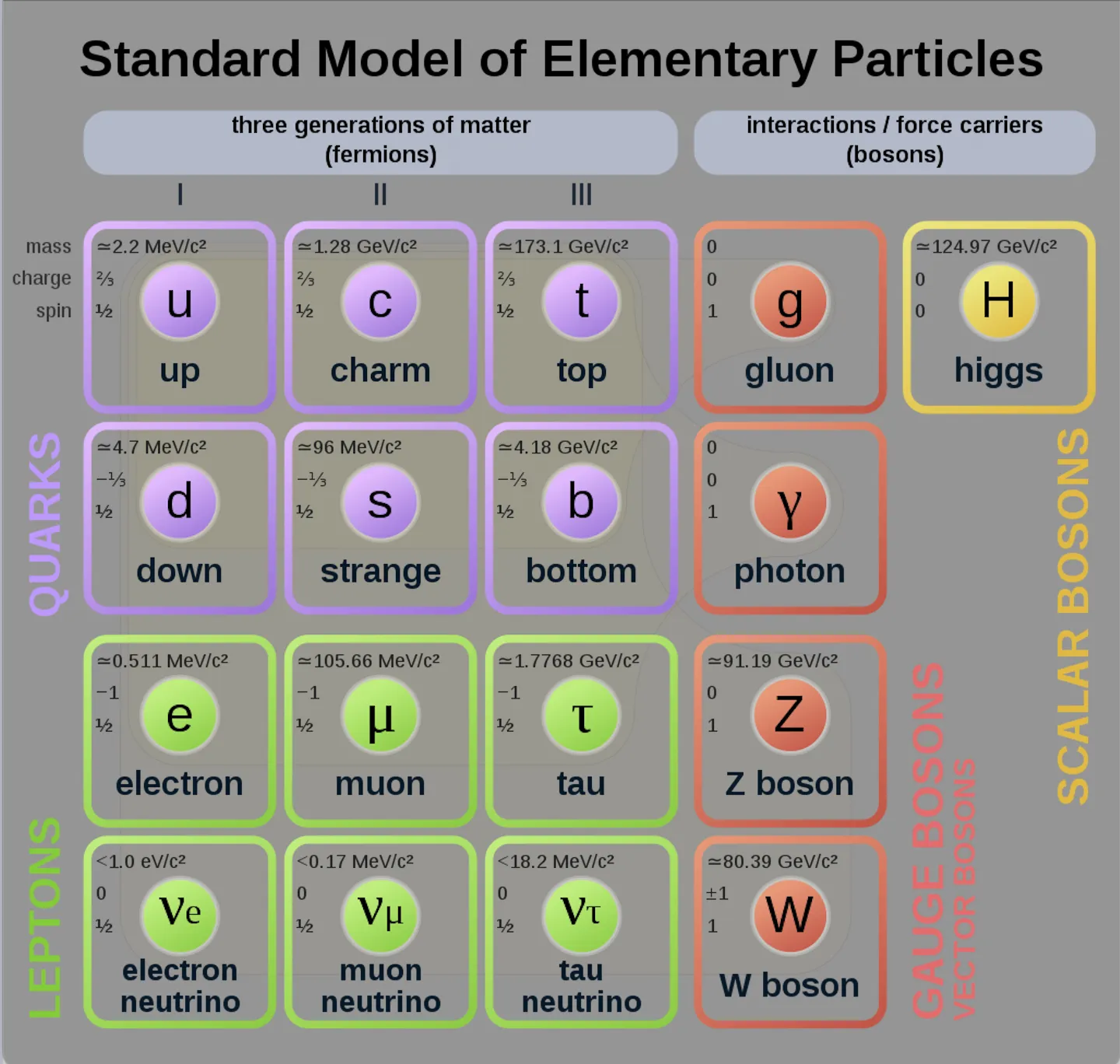
Composition of the Standard Model ‘Elementary’ Particles
Robert R. Scott, III, PE
Honorary Member of
The Technical Society of Knoxville
Monday, April 14, 2025
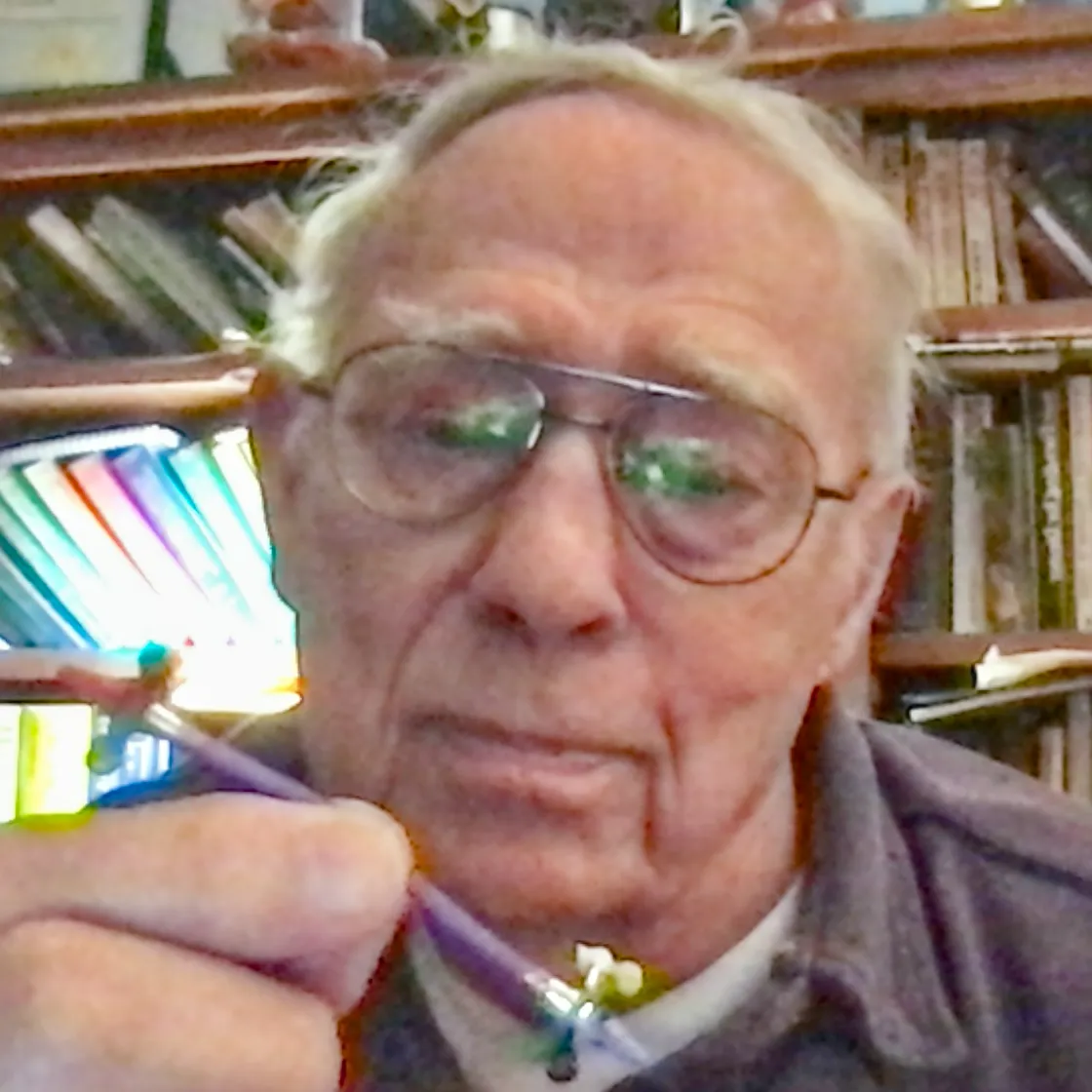
Bob Scott is a chemical engineer (PE) with a BS from the University of Tennessee and MS from the University of Cincinnati.
He worked in the chemical industry for 16 years (duPont, Olin, Shell Chemical and Oak Ridge National Laboratory) and taught at Pellissippi State Community College for 26 years.
Bob is a current member of the TSK Board of Directors. He is a past president, and he also served as TSK’s secretary for many years.
At the age of 90 years Bob is beginning a new career as a theoretical particle physicist and this will be the first public presentation of his alternate theory of the composition of the standard model elementary particles.
In particle physics, an elementary particle or fundamental particle is a subatomic particle that is not composed of other particles. The Standard Model presently recognizes seventeen distinct particles — twelve fermions and five bosons. However many people suspect that a particle is not a fundamental particle if it breaks up into other particles shortly after it is created. One attempt at understanding the nature of fundamental particles is string theory, an idea in theoretical physics that reality is made up of infinitesimal vibrating strings, smaller than atoms, electrons or quarks.
Bob’s theory is: everything is made of positive and negative versions of a six sided particle he has named a “knuck.”
Not everyone will agree with his theory (does anyone?) but it may give you some thoughts. Several physicists have been very helpful.
For more information on TSK and its meetings, please email TSK secretary, This email address is being protected from spambots. You need JavaScript enabled to view it. or call him at 865-679-9854.
Community Connected Learning in the 865 Academics — TSK Annual Meeting
 Windy Clayton
 Brad Corum
Windy Clayton
Partner Engagement Officer
Knox County Education Foundation
Brad Corum
Director of Academies
Knox County Schools
Monday, February 10, 2025
Windy Clayton builds partnerships with businesses and organizations to support community connected learning in the 865 Academics. She earned a Bachelor’s Degree in Applied Human Science, a Masters of Arts in Teaching from East Tennessee State University and an Education Specialist Degree in Education Leadership.
Brad Corum previously served as a Teacher, Assistant Principal and Principal for Karns Middle, Karns High School and Carter High School.
Our speakers will provide an overview of 865 Academies and how they are transforming our high schools. Knox County Schools partnered with Ford Next Generation Learning and Knox Education Foundation to foster a community conversation around college and career preparedness and the types of experiences, skills and competencies our students need to truly be ready for success beyond high school graduation, whether that means enrolling in college or trade school, enlisting in service to their country, or gaining employment in a local high-ware, high skill and in-demand profession with an entrepreneurial mindset.
Brad and Windy work together to connect industry experts and partners with KCS students. We know students strive when learning is challenging, hands-on and relevant to their future goals and aspirations. They have data they want to share as they are halfway through year 3 of the program implementation. They will facilitate a conversation on how people can get involved and how every “yes” is a capital “YES” because of the impact on our students.
The meeting will also serve as our Annual Meeting where the membership will vote on new Board members and address other business as needed.
 Credit: Knox County Schools
For more information on TSK and its meetings, please email TSK secretary, This email address is being protected from spambots. You need JavaScript enabled to view it. or call him at 865-679-9854.
The Meaning and Origin of Knoxville and Knox County Street Names

Allen R. Coggins
Toponymist
Monday, January 13, 2025
Allen Coggins is a toponymist (one who studies the cultural and historical heritage of a place or region). He has authored three books: Place Names of the Smokies, Tennessee Tragedies, and Escape from Bone Cave. He is presently working on a fourth book, tentatively entitled “The Meaning and Origin of Knoxville and Knox County Street Names.”
For much of his professional career, Allen was an emergency management specialist with Oak Ridge Associated Universities. He is a member of the Tennessee Committee on Geographic Names. This advisory committee reports to the U.S. Board on Geographic Names of the U.S. Geological Survey. In a previous life he was a conservationist who served as Chief Naturalist for both Georgia and Tennessee state parks.
Allan is a former president (2005) of our society. Along with Steve Hillenbrand and others, he is a member of the “Wednesday Afternoon Trailhead Beer Market Professors Roundtable.” He and wife Barbara reside in Blount County, close to their beloved Smokies. The presentation is about his upcoming book.

For more information on TSK and its meetings, please email TSK secretary, This email address is being protected from spambots. You need JavaScript enabled to view it. or call him at 865-679-9854.