
GreyW
Organizing the 2024 Tennessee Science Bowl


Jennifer Tyrel and Manon Fleming
Oak Ridge Associated Universities
and
Oak Ridge Institute for Science and Education
Monday, December 11, 2023
The Tennessee Science Bowl is a question-and-answer competition open to high school students in schools as well as home-schooled students. Science Bowl is an event sponsored by the U.S. Department of Energy. The Technical Society of Knoxville has been a sponsor of the Tennessee Science Bowl for years.
The presentation will explain, in an entertaining way, what types of questions the student teams may expect, how questions are selected and judged, the diversity of roles performed by volunteers, how volunteer training and preparation is accomplished, and how student teams hone their skills for the contest.
Jennifer Tyrell is Associate Manager for K-12 STEM Education Programs at Oak Ridge Associated University (ORAU). She has a bachelor’s degree in biology from the University of Tennessee and a master's in curriculum and instruction from WGU Tennessee. She is a former teacher for AmericCorps as well as a former math teacher.
Manon Fleming is the Tennessee Science Bowl coordinator and a K-12 STEM project manager at Oak Ridge Institute for Science and Education (ORISE). She has a bachelor’s degree in industrial engineering as well as an MBA from the University of Tennessee. She is a former teacher and worked previously for Y-12.
Both presenters enjoy working with and developing young people for futures in math, science and engineering.
For more information on TSK and its meetings, please email the secretary, This email address is being protected from spambots. You need JavaScript enabled to view it. or call him at 865-679-9854.
Volunteer opportunities at the 2024 Tennessee Science Bowl
The Tennessee Science Bowl Regional is hosted by ORAU at the Friendsville campus of Pellissippi State Community College.
It will be a two-day in person event beginning with registration and welcome on Friday, February 23, 2024 and competition on Saturday, February 24, 2024.
Please volunteer your time and skills to help make the 2024 Tennessee Science Bowl a success.
Reducing Carbon Production at TVA Gas Fired Energy Plants

Andrew Campbell
Decarbonization Senior Project Manager
Tennessee Valley Authority
Monday, November 13, 2023
The Tennessee Valley Authority (TVA) is working with TC Energy to study carbon capture technology to reduce emissions at TVA’s natural gas facilities in Ackerman, Mississippi and in Drakesboro, Kentucky.
Carbon capture, use, and storage (CCUS) is proposed and explored as one of the pathway scenarios to “net zero greenhouse gas emissions by 2050” in TVA's Valley Pathways Study, conducted in cooperation with The Baker School of Public Policy and Public Affairs. CCUS also has been chosen in TVA’s Carbon Report to be tried out in practice as one of the innovative energy technology ‘carbon levers’ (actions for deeper carbon reduction).
TC Energy’s carbon capture approach works by sending the exhaust from natural gas power facilities to a carbon dioxide (CO2) scrubber adjacent to the plant. A chemical reaction absorbs the CO2 before the exhaust is released into the air. The absorbent is then pumped to another vessel and treated with heat that releases the CO2. This released CO2 is then compressed and sent deep into the earth for safe storage.

For more information on TSK and its meetings, please email TSK secretary, This email address is being protected from spambots. You need JavaScript enabled to view it. or call him at 865-679-9854.
Genera — Ag-based Fiber for Sustainable Products
Kelly Tiller
Chief Strategy Officer and Founder
Genera Inc.
Monday, February 12, 2024
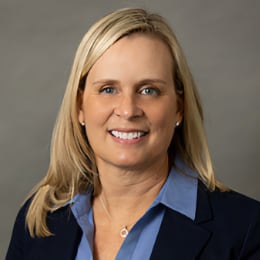
The February program will be on a local company, Genera, located in Vonore TN at the Niles Ferry Industrial Park. The company is recognized as the largest fully integrated non-wood fiber and fiber product manufacturing facility in the United States. The mill produces ag-based fiber for market use as well as molded fiber food service and packaging products. The process and technology used in the facility creates a high-quality, short fiber wet lap market pulp in a more sustainable method then other technologies. Their thermoforming operations produce high-quality, durable goods for use in a variety of food service applications.
In addition to the state-of-the-art manufacturing and warehousing capacity, the facility has significant laboratory space utilized by Genera for product R&D and quality control services.
Genera partners with farmers to handle a wide range of biomass feedstocks each year, including dedicated agricultural crops, crop residues and woody materials. The company is working with East Tennessee landowners and agricultural producers to create new markets for the materials they grow.
Genera is focused on sustainable utilization of agricultural materials for products that benefit rural communities and consumers. Agricultural feedstocks, both dedicated crops and residues, provide key building blocks for an array of products. Genera’s core expertise is the development, production, and supply of agricultural feedstocks to feed its own manufacturing facility, producing high quality agricultural fibers and compostable products.
Dr. Tiller earned her Ph.D. in Agricultural Economics from University of Tennessee, Knoxville. She is widely recognized as an industry expert, having been called on more than a half dozen times to testify before Congress and frequently providing agency briefings and analyses.

For more information on TSK and its meetings, please email TSK secretary, This email address is being protected from spambots. You need JavaScript enabled to view it. or call him at 865-679-9854.
EMPOWER TN Catalyzing Electric Vehicle Adoption

Darcy Ayers
Project Coordinator
East Tennessee Clean Fuels
Monday, September 11, 2023
The choice of electric vehicles (EV) is growing quickly now. The total cost of EV ownership has decreased drastically thanks to governmental incentive programs to reduce greenhouse gas emissions. But for many potential EV drivers, the scarcity of charging locations compared to fossil fuel stations still is a formidable barrier to make the leap.
The EMPOWER TN project, managed by Darcy Ayers, focuses on education and direct technical assistance to rapidly increase the number and distribution of EV charging facilities at workplaces statewide. The project is funded through the U.S. Department of Energy.
With Equitable Mobility Powering Opportunities for Workplace Electrification Readiness or EMPOWER, East TN Clean Fuels hopes to be a one-stop shop for helpful workplace-focused resources, such as funding opportunities that may offset the cost of purchase and installation. By bringing EV ports to work, EMPOWER TN is simplifying the transition to EV's and making charging convenient and easy, especially for those without access to chargers at home.
Since estimates show that the second-most frequently utilized charging is the workplace, EMPOWER TN is working to reduce the barriers to these employees accessing EV's and the economic and environmental benefits of driving electric. As EV ownership expands and infrastructure matures, EMPOWER TN strives to make sure EV's are truly for everyone.
Darcy Ayers is a Colorado native who has spent the better part of the last 20 years in East Tennessee. She graduated from UT Knoxville with a Bachelor’s in Anthropology, a minor in Geography, and a Master’s in Applied Sociology. Before joining the ETCleanFuels team in June 2023, she was Program Director at SEEED, leading the Career Readiness Program and other workforce development boot camps for young adults. Darcy is excited about the opportunity to continue serving her community through the pursuit of a just energy transition. Outside of work, you can find her always doing something for her rugby club or hanging out at home with her husband, dog, and cat.

For more information on TSK and its meetings, please email TSK secretary, This email address is being protected from spambots. You need JavaScript enabled to view it. or call him at 865-679-9854.
Global Energy Transition

Dr. Michael W. Howard
Chief Executive Officer Emeritus
Electric Power Research Institute
Monday, July 10, 2023
Dr. Howard is an energy executive who combines business acumen with deep technical expertise and in-depth electric utility experience. He has over forty years of results-driven global experience with a bias toward collaboration, entrepreneurship, and innovation in organizations ranging from start-ups to large public companies.
Most recently, Dr. Howard served for ten years as the CEO of EPRI, a $440 million global company headquartered in Palo Alto, California, with several U.S. and international offices. EPRI develops technology innovations encompassing the production, delivery, and use of electricity, including nuclear power, renewable energy, energy storage, and electric vehicles, with a mission to ensure reliable, affordable, and cleaner electricity for society.
Dr. Howard started his career with Westinghouse after receiving his B.S. in Electrical Engineering from The University of Tennessee. He was chosen for a four-year management trainee program at Westinghouse while receiving his M.S. in Business and Engineering from the University of Pittsburgh. Dr. Howard received his Ph.D. from The University of Tennessee, College of Engineering. His dissertation research focused on advanced artificial intelligence.
After ten years of experience with Westinghouse and its subsidiary, Dr. Howard co-founded a technology company that provided advanced image processing systems for automated microscopic material and biological analysis. After three years, the company merged with an affiliated company to create a roll-up with related companies.
Following the merger, Dr. Howard joined a venture capital company providing equity and debt investment to early-stage technology companies while also serving as an adjunct professor at the University of Tennessee, teaching a variety of master's and Ph.D. courses in Industrial Engineering.
From the mid to late 90s, Dr. Howard was president and CEO of a technology-based power electronics technology company providing end-use power quality solutions for large industrial customers and electric utility companies.
EPRI acquired the business in 1999. Following the acquisition, Dr. Howard served in several EPRI leadership roles before EPRI's Board of Directors selected him as its President and CEO in 2010. He retired as CEO at the end of 2020, and the Board of Directors then appointed Dr. Howard as its CEO Emeritus.
Dr. Howard serves on the Board of Directors of three technology-based, energy-focused companies.
He also serves on the Carnegie Mellon University's Scott Institute advisory council, is Chair of the World Energy Council headquartered in London and is a Senior Fellow for the Rome-based Enel Foundation.
Dr. Howard recently served on a technical committee of the U.S. National Academies of Sciences. In 2019, Dr. Howard was awarded the Distinguished Energy Award in Washington, D.C., for lifetime contributions to providing technical innovations and leadership to global energy issues. Dr. Howard is an active IEEE and National Association of Corporate Directors member.
For more information on TSK and its meetings, please email TSK secretary, This email address is being protected from spambots. You need JavaScript enabled to view it. or call him at 865-679-9854.
Halfway Home ... and a Long Way Still to Go

Tom Ballard
Chief Alliance Officer
PYA
Monday, June 12, 2023
For five decades, Tom Ballard, a native of East Tennessee, has been a driving force of entrepreneurial evolution. Working for the University of Tennessee’s Institute of Public Service, he advised public officials and manufacturers, eventually heading that non-agricultural extension service for 20 years and becoming UT’s Vice President for Public and Governmental Relations. Next, he joined Oak Ridge National Laboratory as its first Director of Partnerships, which extended his range of activity beyond the borders of Tennessee. During both of these engagements, Ballard led initiatives to build multi-organizational alliances focusing on statewide telecommunications networking, automotive research, and land use planning.
After he turned 65 in 2011, Ballard joined PYA as Director of Innovation and Entrepreneurial Initiatives. He launched Teknovation.biz, a daily electronic newsletter focused on technology, innovation, and entrepreneurship. He also serves on, and has chaired, many local and regional nonprofit and educational organizations, advisory boards and councils.
Ballard’s vision and efforts have contributed greatly to advancing entrepreneurial evolution in East Tennesse, which is turning Knoxville – Oak Ridge into a hub for innovative high-tech enterprises that employ carbon-fiber, composite, nanoscale and other advanced material technologies. These companies also benefit from the latest electronic, additive manufacturing, bioscience, an computational discoveries of the Governor’s Chairs at the University of Tennessee and Oak Ridge National Laboratory.
In 2020, PYA launched an annual $50,000 competition for emerging enterprises — named the Ballard Innovation Award — in Tom’s honor.
PYA, founded 1983 in Knoxville as Pershing and Yoakley CPA’s, is one of our area’s outstanding corporate success stories. Listed by Forbes among America’s Best Accounting and Tax firms, PYA consistently ranks under Modern Healthcare’s Top 20 healthcare consulting firms. It also has been ranked third-highest in female ownership among Top 100 Accounting Firms by Inside Public Accounting and is a Top 15 auditor of the nation’s largest health systems.
For more information on TSK and its meetings, please email TSK secretary, This email address is being protected from spambots. You need JavaScript enabled to view it. or call him at 865-679-9854.
Transactive Energy Management: the Future Roles of TVA and its Distributors in Electric Power Delivery (PDH*)

Dr. Leon M. Tolbert
Chancellor’s Professor and Min H. Kao Professor of Electrical Engineering and Computer Science
Tickle College of Engineering
University of Tennessee, Knoxville
Recipient of the TSK-sponsored Charles E. Ferris Faculty Award, 2018
Monday, May 8, 2023
Dr. Tolbert will be discussing the principles of transactive energy management (TEM) and the challenges ahead for electric power generators and distributors to manage the technology for reliable delivery. The evolving smart grid — with increased use of renewable energy and distributed energy resources (DER) — offers the potential for significant efficiency improvements through market-based transactive exchanges between energy producers and energy consumers. “Transactive Energy” is the term used to describe this new approach.
TEM is crucial to the rapid evolution and economic success of DER, including microgrids, commercial structures; even individual homes. A recent report by the Pacific Northwest National Laboratory (PNNL) found that a transactive energy system could reduce daily load swings by 20 to 44% and peak loads by 9 to 15%. That is highly significant because it is most costly to satisfy peak power demand — in economic terms and even more in environmental impacts. Until recently, only natural gas fired power plants were capable of responding quickly enough to avert impending brownout and balckout risks from spikes in demand. In a time when we hasten great efforts to reduce greenhouse gases it would be counterproductive to build new peaker plants — and pipelines to supply them — that require capital investments amortizable over decades only.
The PNNL study concluded that consumers could save about 15 percent on their annual electric bill by coordinating with their utility to control devices that use large amounts of electricity, such as heat pumps, water heaters and electric vehicle chargers. Advanced TEM software suites, particularly Athena by Stem, Inc. and Autobidder by Tesla, Inc. have seen exponential growth in the last three years. Tesla’s Virtual Power Plant (VPP) goes one step beyond demand control. Already in use in Australia, the UK, and several U.S. areas, including California and Texas, it leverages not only customer choices on the demand side. PowerWall battery owners can subscribe to join the supply side by choosing parameters in Autobidder under which conditions they are willing to sell some of their stored energy to the grid when the utility offers to pay up to multiples of average kWh prices.
Dr. Tolbert received the Bachelor’s, M.S., and Ph.D. degrees in electrical engineering from Georgia Tech. He worked at Oak Ridge National Laboratory (ORNL) from 1991 until 1999 on electric distribution and power quality projects. He joined the University of Tennessee in 1999 and is a founding member and thrust leader for CURENT, the NSF/DOE Center for Ultrawide-area Resilient Electric Energy Transmission Networks. He served as head of the Min H. Kao Department of Electrical Engineering and Computer Science from 2013 through 2018. He also is a faculty member in the Bredesen Center for Interdisciplinary Research at UT and an adjunct participant with ORNL’s Power Electronics and Electric Machinery Research Center.
Dr. Tolbert is a Fellow of the IEEE and a Registered Professional Engineer in the state of Tennessee. He conducts research in utility applications of power electronics including microgrids, interface with renewable energy sources, medium voltage multilevel converters incorporating silicon carbide power devices, and electric vehicles. Read more about his outstanding professional service in IEEE and his many awards and recognitions on his University of Tennessee web page.
* This meeting is offered as a professional development hour for Tennessee-licensed engineers and architects, who attend in person.
The presentation meets the TN State Board of Architectural and Engineering Examiners’ continuing education requirements. It will consist of at least 50 minutes of prepared presentation with discussion reserved for the time after the meeting. TSK does not guarantee approval, but strictly meets the Board-specified requirements and issues a Certificate of Attendance. (Certificates for virtual attendance cannot be issued yet.)
The State Board does not pre-approve such hours. It is the responsibility of each PE or architect to determine whether the topic conduces to proficiency in her or his field of professional practice.
Dr. Tolbert addressed the Technical Society of Knoxville on July 13, 2020 during its 100th year of existence
He discussed the performance characteristics of the national electrical grid and the challenges that grid operators face from
the growing shares of wind, solar, and biofuels electricity.
He emphasized the much increased storage requirements associated with renewable energy sources and
how they can be utilized in maintaining the grid's nominal parameters.
This video provides great background information for his coming presentation.
Turning trash into fertile compost
Tom Leonard
Executive Director
Sevier Solid Waste, Inc. (SSWI)
Monday, April 10, 2023
SSWI is owned by the cities of Gatlinburg, Pigeon Forge, and Sevierville as well as by Sevier County. Tom Leonard oversees the operation of the solid waste processing and recycling program. Instead of landfilling the solid waste collected in Sevier County — including nearby Dollywood and the Great Smoky Mountains National Park — SSWI turns it into a composting material using large rotating drums called digesters.
Everything from food waste to paper and plastic can be mixed together. In the 185′ long, 12′+ diameter continuously rotating digesters, air and bacteria break down the mixture into an organic material that can be used as compost. Careful screening helps prevent non compostable material from entering the mix. The operation has been in existence since 1988.
The material collected used to go into a landfill but that is not an option you want to use in a tourist area like Sevier County. Landfills require lots of land and are expensive to operate. The digestion and composting option diverts 70 percent of the entire waste stream, saving money and land. It produces over 50,000 tons of Grade A, nutrient-dense compost each year.
SSI compost is available free of charge to the public to spread on local farms, use for erosion control, enhance vegetation, or apply to topsoil mixtures.
The SSWI website shows many examples of how the compost is used in the region.
Tom Leonard took charge of the original composting facility, almost 25 years ago, after the company that had built it was unable to run it profitably and a contracted big waste management corporation also failed to do it economically. With enormous persistence and great skill he succeeded to improve and tune the process such that it became less expensive than hauling all the waste to a landfill or incinerator, as is done almost everywhere else. Visitors from all over the world have come to study his operation.
With the addition of new equipment to break down plastic bottles as well as aluminum and tin cans, SSWI now anticipates to decrease the landfill portion of the waste stream to as little as 15 percent.
For more information on TSK and its meetings, please email the secretary, This email address is being protected from spambots. You need JavaScript enabled to view it. or call him at 865-679-9854.

Information flow to and from the nanoscale: combining microscopy with advanced controls and artificial intelligence to learn about and modify materials at fundamental length scales

Dr. Rama Vasudevan
Group Leader
Data NanoAnalytics Group
Center for Nanophase Materials Sciences
Oak Ridge National Laboratory
Monday, March 13, 2023
This talk will give a broad overview of the work and mission of the Center for Nanophase Materials Sciences (CNMS) and focus on the use of advanced scanning probe microscopes and scanning transmission electron microscopes to characterize not only the structural properties of materials but also reveal their functional properties from nanometer to atomic scales. We specialize in integrating novel control and data acquisition methods into our microscopes to increase the precision, reliability, and breadth of information we can gather. Furthermore, we utilize to the highly concentrated stress, electrical, and thermal fields that these microscopes can generate in materials to both see how materials behave under these extremes and to modify materials to imbue them with new properties.
Dr. Vasudevan's research is focused on smart, autonomous synthesis and characterization tools driven by improvements in machine learning and tight integration between theory, automation and individual instruments. Specific sub-focus is on applications and development of scalable reinforcement learning for scanning probe microscopy, to optimize, manipulate and better characterize ferroic materials at the nanoscale, and upgrade scanning probe microscopy from a standard characterization tool to one capable of autonomous physics discovery by connecting algorithms, edge computing, and theory in end-to-end automated workflows.
For more information on TSK and its meetings, please email the secretary, This email address is being protected from spambots. You need JavaScript enabled to view it. or call him at 865-679-9854.

When President Bill Clinton announced the National Nanotechnology Initiative (NNI) in January 2000, he said its research goals may take twenty or more years to achieve. Four years later, President George W. Bush propelled the initiative into the billion dollar sphere with his signature on the 21st Century Nanotechnology Research and Development Act. President Joe Biden's request of $1.99 billion for 2023 would bring NNI spending since its inception to $40.7 billion.
The National Science and Technology Council coordinates research strategies and policies across the executive branch. Twenty federal departments, independent agencies and commissions work together to advance discovery and innovation through NNI efforts that span the entire technology development pathway, from early-stage fundamental science through applications-driven activities. The evolution of the “internet of things,” three-dimensional printing, COVID-19 vaccines, more flexible textiles, and surface coatings that reject water and dirt are just a few examples of developments benefitting from NNI achievements. Better catalysts may make it possible to use methanol fuel cells instead of batteries for long range transportation.
Research continues for quantum materials that promise to drive device fabrication toward atomic precision. A nanotechnology-inspired Grand Challenge for Future Computing was launched in 2015 to create a new type of computer that can proactively interpret and learn from data, solve unfamiliar problems using what it has learned, and operate with the energy efficiency of the human brain
The U.S. Department of Energy plays a key role by operating five Nanoscale Science Research Centers (NSRCs). These are open to the research community on a peer-reviewed basis. Each NSRC is located at a DOE National Laboratory, providing users with access to many other facilities and additional opportunities for collaboration.
- Center for Nanoscale Materials, Argonne National Laboratory
- Center for Functional Nanomaterials, Brookhaven National Laboratory
- Molecular Foundry, Lawrence Berkeley National Laboratory
- Center for Nanophase Materials Sciences, Oak Ridge National Laboratory
- Center for Integrated Nanotechnologies at Sandia National Laboratories and Los Alamos National Laboratory
Artificial Intelligence Initiative Tennessee
Dr. Lynne Parker
Associate Vice Chancellor
Director, AI Tennessee Initiative
Min H. Kao Department of Electrical Engineering and Computer Science
Tickle College of Engineering
University of Tennessee, Knoxville
Monday, February 13, 2023
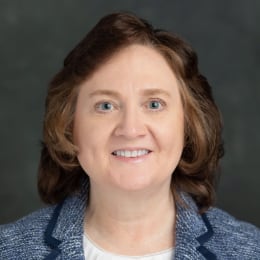
Before returning to her native Knoxville last year, Dr. Parker led national artificial intelligence policy efforts for four years in the White House Office of Science and Technology Policy, serving as Deputy Chief Technology Officer of the United States, Founding Director of the National AI Initiative Office, and Assistant Director for AI. She also served as co-chair of the Congressionally-directed National AI Research Resource Task Force, which is working to democratize access to the computational and data infrastructure needed for AI research. She served for two years (2015-2016) at the National Science Foundation as Division Director for Information and Intelligent Systems.
In these roles across three Administrations, Dr. Parker led the development of numerous landmark national AI policies bolstering research, governance, education and workforce training, international engagement, and the Federal use of AI.
She now also spearheads the AI Tennessee Initiative, the university’s strategic vision and strategy for multidisciplinary artificial intelligence education and research. The initiative is designed to increase UT’s funded research, expand the number of students developing interdisciplinary skills and competencies related to AI, and position the university and the state of Tennessee as national and global leaders in the data-intensive knowledge economy.
Dr. Parker first joined the UTK faculty in 2002 as an expert on distributed and intelligent robot systems, human-robot interaction, and AI, having published extensively in these and related areas. She previously worked for several years as a Distinguished Research and Development Staff Member and Group Leader at Oak Ridge National Laboratory, researching multi-robot and human-robot systems.
She is a member and fellow of several national scientific associations, including the IEEE; recipient of many prominent research, teaching and service awards; and has a B.S. from Tennessee Technological University, an M.S. from the University of Tennessee, and a Ph.D. from the Massachusetts Institute of Technology, all in computer science.
For more information on TSK and its meetings, please email the secretary, This email address is being protected from spambots. You need JavaScript enabled to view it. or call him at 865-679-9854.