GreyW
Cold Bones and Cold Cases


Arthur M. Bohanan
Forensic Scientist
Certified Latent Print Examiner
Monday, January 9, 2023
Mr. Bohanan is an international award-winning patented inventor, researcher, lecturer, and writer, a Certified Latent Print Examiner (one of 860 in the world, and a certified police instructor with 55 years in the practical study and application of forensics in thousands of violent crime scenes. He earned a bachelor’s degree in Criminal Justice from East Tennessee University with further studies at the University of Tennessee, Knoxville.
Mr. Bohanan created the first Internet Crime Against Children (ICAC) task force in Tennessee in 1998 and worked in an online undercover capacity until he retired in May 2001 as a Police Specialist III, former AFIS Manager, and Senior Forensic Examiner with the Knoxville Police Department (26 years).
Mr. Bohanan twice received the Knoxville Police Officer of the Year award. He was inducted into the International Hall of Fame in Atlanta, sponsored by the Inventors of America, with two distinguished awards plus a doctorate in science and technology for pioneering research involving children’s fingerprints. He has responded to many major disasters, including the Columbia Space Disaster, the World Trade Center, and Hurricane Katrina. He has assisted in eight airline crashes to help identify human remains. He is currently researching to locate lost graves and determine the gender of the long-dead in 20 seconds or less.
For more information on TSK and its meetings, please email the secretary, This email address is being protected from spambots. You need JavaScript enabled to view it. or call him at 865-679-9854.
Arthur M. Bohanan’s books — including a historical fiction series about
Henry Bohanan, his great, great, great grandfather,
a veteran of the American Revolution — are available from Amazon or his Facebook page.


The Tennessee Science Bowl


Manon Fleming and Jennifer Tyrell
Monday, December 12, 2022
The Tennessee Science Bowl is a fast paced academic competition that offers teams of high school students from across the state of Tennessee a chance to match their wits in math and science. The winner of the Tennessee Science Bowl will advance — all expenses paid — to the National Science Bowl in Washington D.C. in April 2023.
Jennifer Tyrell is Associate Manager for K-12 STEM Education Programs at Oak Ridge Associated University (ORAU). She has a bachelor’s degree in biology from the University of Tennessee and a master's in curriculum and instruction from WGU Tennessee. She is a former teacher for AmericCorps as well as a former math teacher.
Manon Fleming is a K-12 STEM project manager at Oak Ridge Institute for Science and Education (ORISE). She has a bachelor’s degree in industrial engineering as well as an MBA from the University of Tennessee. She is a former teacher and worked previously for Y-12.
Both presenters enjoy working with and developing young people for futures in math, science and engineering.
For more information on TSK and its meetings, please email the secretary, This email address is being protected from spambots. You need JavaScript enabled to view it. or call him at 865-679-9854.
Volunteer opportunities at the 2023 Tennessee Science Bowl
The Tennessee Science Bowl Regional is hosted by ORAU at the Friendsville campus of Pellissippi State Community College.
It will be a two-day in person event beginning with registration and welcome on Friday, February 24, 2023 and competition on Saturday, February 25, 2023.
Please volunteer your time and skills to help make this year’s Science Bowl a success.
The City of Knoxville’s Scooter Rental Program (PDH*)

Dr. Christopher Cherry
Associate Department Head of Undergraduate Studies and Professor
Department of Civil and Environmental Engineering
Tickle College of Engineering
University of Tennessee, Knoxville
Recipient of the TSK-sponsored Charles E. Ferris Faculty Award 2015 & 2020
Monday, November 14, 2022
Dr. Cherry conducted North America’s first electric bike sharing pilot program, using the UTK campus as a research test bed. It also was the subject of his first presentation to The Technical Society of Knoxville.
He advised and analyzed the City of Knoxville’s three-year shared dockless scooter pilot program, which resulted in the Knoxville City Council’s approval of the present Shareable Powered Micromobility Vehicles and Systems Ordinance, last December, which most recently was revised to permit shared e-bikes, too.
Chris Cherry received his BS and MS in Civil Engineering from the University of Arizona and received his PhD in Civil and Environmental Engineering from the University of California, Berkeley in 2007.
His research interests include multimodal transportation planning and operations, public transportation systems, travel behavior and demand, transportation economics, sustainable transportation and transit security. Since coming to UT in August 2007, he has embarked on a research and education program that focuses on sustainable transportation, including aspects of transportation safety, economics and environment.
Much of his research work has focused on rapid motorization of Asia, including research projects in Vietnam, India, and China, for which he received a prestigious National Science Foundation (NSF) Faculty Early Career Development (CAREER) award to study motorization and sustainability in China.
Cherry has explored behavioral and environmental aspects related to electric bikes, scooters, and larger electric vehicles. He has published articles related to the growth of electrical two-wheelers.
He’s also interested in the role of technology in commercial vehicle safety as well as bicycle transportation planning and safety.
He studies bicycle and pedestrian safety investments, which are often difficult to prioritize in traditional highway safety funding mechanisms.
Cherry received a 2009 Faculty Environmental Leadership Award from UT for his commitment to environmental stewardship on campus as well as the CEE Research Recognition Award in 2012 and 2009.
* This meeting is offered as a professional development hour for Tennessee-licensed engineers and architects.
The presentation meets the TN State Board of Architectural and Engineering Examiners’ continuing education requirements. It will consist of at least 50 minutes of prepared presentation with discussion reserved for the time after the meeting. TSK does not guarantee approval, but strictly meets the Board-specified requirements and issues a certificate of attendance.
The State Board does not pre-approve such hours. It is the responsibility of each PE or architect to determine whether the topic conduces to proficiency in her or his field of professional practice.
Here is one of Dr. Cherry’s videos
The New Knoxville Baseball Stadium

Doug Kirchhofer,
Chief Executive Officer
Boyd Sports LLC
Monday, October 10, 2022
This project has generated a lot of interest and discussion about the potential impact it will have on the citizens of Knoxville, the area where it will be constructed and the future development of downtown and East Knoxville. Since our beginning The Technical Society of Knoxville has been involved in discussions of major projects. We are glad to be able to provide this opportunity for discussion and input.
Doug Kirchhofer has over 20 years with the Tennessee Smokies Baseball Organization. He will discuss the planning for the new stadium and be able to answer questions about the development of ths impactful project.
Pathways Toward a Net Zero Emissions World
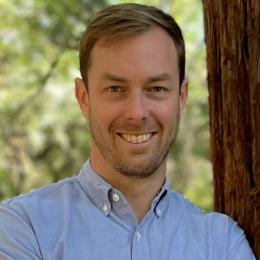
David L. McCollum, PhD
Senior R&D Staff
Mobility and Energy Transitions Analysis (META) Group
Oak Ridge National Laboratory
Monday, September 12, 2022
International agreements and domestic policies call for deep decarbonization of the global energy system while ensuring that broader objectives for sustainability are simultaneously achieved.
Analysis of such futures demands integrated modeling tools that bridge sectors, scales and disciplines.
Dr. McCollum’s presentation will provide examples of such analyses, with a particular eye toward the socio-technical pathways toward achieving a net zero emissions world.
Dr. David L. McCollum’s expertise spans economics, engineering, policy analysis, and corporate advisory services. His research attempts to inform state, national (developed and developing) and global energy and environmental issues related to, among others, deep decarbonization, net-zero emissions pathways, energy-transport-climate policies electric sensor planning, end-use sector electrification (transport, buildings, industry), Sustainable Development Goals (including inter-dependencies), financing needs for the energy system transformation, and human dimensions of climate change. He employs energy-economic systems and integrated assessment models in support of this work (e.g., MESSAGESix-GLOBIOM, TIMES-MARKAL,REGEN, GCAM)
Before joining ORNL in September 2021, David was a Senior Research Scholar with the Energy Program at the International Institute for Applied Systems Analysis (IIASA) in Laxenburg, Austria, and a Principal Technical Leader at the Electric Power Research Institute (EPRI) in Palo Alto, California.
He currently holds secondary appointments as
-
Guest Senior Research Scholar at IIASA
-
Research Fellow in Energy and Environment at the Howard H. Baker Jr. Center for Public Policy at the University of Tennessee
-
Honorary Senior Research Fellow at Imperial College London.
The latter is in his capacity with the Intergovernmental Panel on Climate Change (IPCC) Technical Support Unit (TSU - Working Group III) for the Sixth Assessment Report (AR6).
David previously led activities within
-
the Global Energy Assessment
-
IPCC Fifth Assessment Report (AR5 - WG III)
-
IPCC Special Report on Global Warming of 1.5 °C
-
and other international, multi-stakeholder initiatives, such as for the World Bank and International Council for Science (ICSU).
David received a PhD and MS in Transportation Technology & Policy from the University of California, Davis (USA), Institute of Transportation Studies; an MS in Agricultural & Resource Economics from the same institution; and a BS in Chemical Engineering from the University of Tennessee.

Knoxville’s Fulton Bellows company helped win World War II
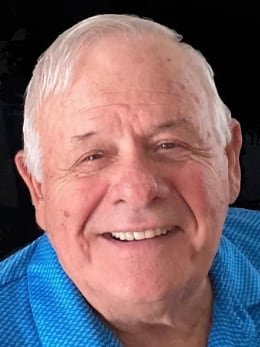
Dewaine Speaks
Weston Fulton: Edison of the South
Monday, August 8, 2022
- Weston Fulton in Tennessee: Edison of the South, a biography of Tennessee’s most prolific inventor
- East Tennessee in World War II, the story of the tremendous contributions by East Tennesseans during the war
- Historic Disasters of East Tennessee, which chronicles some of the disasters that often impacted entire communities
- Murder Mayhem in East Tennessee, which covers stories that either had sub-plots or were of historic significance.
- Disney World monorail tire sensors
- Automatic oxygen systems for airliners
- U.S. National Centrifuge Program
- Dampening devices in the transmissions of automobiles
- Controls on the distiller in Jack Daniels distillery
- Automatic control of the Yugo automobile engine’s air-fuel mixture
- Bellows as part of the fuel control system for NASA rocket engines
- Device that helps control the blood temperature of open-heart surgery patients
- Automatic deployment of parachutes of pilots ejecting at high altitudes
- Automobile thermostats for Nissan Motor Company
- System for providing water for astronauts in space
- Star Wars propulsion system
Using Robotics and Artificial Intelligence to Discover and Design Advanced Perovskite Solar Cells, Radiation Detectors and Sensors (PDH*)
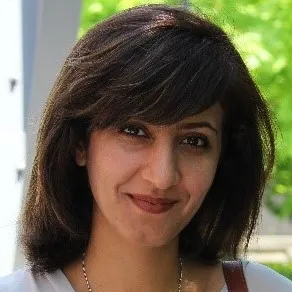
Dr. Mashid Ahmadi
Assistant Professor
Department of Materials Science and Engineering
Tickle College of Engineering
University of Tennessee, Knoxville
Monday, July 11, 2022
Solar energy is one of the most promising renewable energy sources. Research and development of solar cells have gained more value. Recent development in some novel materials has opened possibilities for the production of low-cost and highly efficient solar cells. One such materials system is hybrid organic-inorganic metal halide perovskites.
In recent years, the power conversion efficiency (PCE) of metal halide perovskites (MHP) solar cells have been rapidly improved with PCEs exceeding 25.5% for a single-junction solar cell. Beyond photovoltaic applications, the development of these materials for other applications such as light-emitting diodes (LEDs) photodetectors, and ionizing radiation sensors has been remarkable thanks to their unique optoelectronic properties.
The key remaining challenges blocking widespread application of these materials are their chemical instability and environmental sensitivity. In this talk I will discuss the use of automated laboratory robotics and the use of artificial intelligence/machine learning (AI/ML) to accelerate the discovery and design of compositions and materials processing toward optimized properties including stability of intrinsic materials for solar cells and other applications.
* This meeting is offered as a professional development hour for Tennessee-licensed engineers and architects.
The presentation meets the TN State Board of Architectural and Engineering Examiners’ continuing education requirements. It will consist of at least 50 minutes of prepared presentation with discussion reserved for the time after the meeting. TSK does not guarantee approval, but strictly meets the Board-specified requirements and issues a certificate of attendance.
The State Board does not pre-approve such hours. It is the responsibility of each PE or architect to determine whether the topic conduces to proficiency in her or his field of professional practice.
Accelerating Deployment of Next Generation Nuclear Power

Alex J. Huning
Reactor Modeling and Safety Analyst
Nuclear Energy and Fuel Cycle Division
Oak Ridge National Laboratory
Monday, June 13, 2022
How KUB Will Make High-Speed Broadband Internet Available to its Customers

Adam Crocker
Manager
Fiber Optic Construction
Knoxville Utilities Board
Monday, May 9, 2022
Adam Crocker’s team is responsible for fiber-optic aerial and underground construction, all fusion splicing and service installation.
Advances and Activities in Fusion Energy
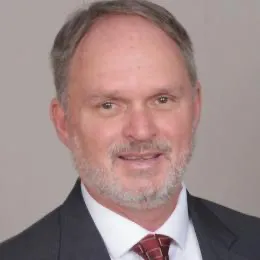
Mickey Wade, PhD
Director
Fusion Energy Division
Oak Ridge National Laboratory
Monday, April 11, 2022
Over 30 years, Wade has written or co-written more than 300 publications and been involved in numerous fusion energy community activities. He was named a fellow of the American Physical Society in 2010 for his outstanding contributions to burning plasma physics, impurity transport and the development of advanced tokamak scenarios.
Wade received a bachelor’s degree in nuclear science and engineering from Virginia Tech and masters and doctoral degrees in nuclear engineering from Georgia Tech.
Dr. Wade recently served as deputy director of Magnetic Fusion Energy for General Atomics and has extensive experience in fusion energy research, programmatic development and strategic planning. Under his leadership, the division is developing the understanding required for an attractive fusion energy source through domestic and international research collaborations, pursuing near-term applications to close the fusion fuel cycle and mitigate plasma disruptions, and developing solutions to materials and fusion nuclear science challenges presented by the harsh fusion environment. The organization also supports the Material Plasma Exposure eXperiment. As part of his role, he works closely with the U.S. ITER Project, which is based at ORNL.
In 15 years at General Atomics, Wade also served as the DIII-D national fusion program director and DIII-D experimental science director. From 1994-2005, he was a senior scientist at ORNL. He was also a leader in developing support and advocacy for ITER and served as co-chair of teh U.S. Magnetic Research Strategic Directions Community Workshops.
He will provide an engaging and accessible update on the many advances and activities underway now in fusion.